Host Your Own Early Years Athletics Week!

The European Athletics Championships 2026 are taking place right here in Birmingham at the iconic Alexander Stadium from 10th-16th August 2026. With Europe’s elite athletes descending on our city, there is no better time to inspire our youngest movers.

Why not host your own mini track-and-field “Play Day or Athletics Week”? You can get children running, jumping, and moving like elite athletes while developing their Sammy Skills. By stepping up as Suzy Startwell, early years practitioners can actively role-model these movements, helping children master vital Fundamental Movement Skills (FMS).

Here is how you can link the Startwell Birmingham physical characters to your own mini athletics tournament.

 Active Azra’s Hurdles & Throwing Challenges

Active Azra focuses on reducing sedentary time and keeping children moving throughout the day. Running events are the perfect way to get their belly buttons moving and mimic the fast-paced action of the stadium tracks.

  • The Beanbag Javelin: Use manipulative skills to practice throwing for distance. Set up a throwing line and let children launch soft beanbags or foam javelins down the field. Use cones to mark how far their throws travel.
  • Relay Hurdles: Introduce a simple team relay race using soft foam blocks or rolled-up mats as mini hurdles. Children must run, lift their knees, and step over the obstacles to pass a beanbag to their teammate.

Sammy Skills’ Jumping & Balancing Events

The Sammy Skills character promotes physical, skill-based play by focusing on locomotor, stability, and manipulative skills. Jumping is a key milestone that requires coordination, balance, and leg strength.

  • The Long Jump Pit: Place a long gym mat on the floor and mark out distance lines with coloured tape. Encourage children to practice jumping as far as they can go.
  • High-Jump Hoops: Lay hula hoops across the floor in a grid. Children must jump with two feet from hoop to hoop without stepping on the edges, developing spatial awareness and stability.

180 Katie’s Running & Heart-Pumping Stamina

Children under five need at least 180 minutes of physical activity every day. 180 Katie teaches children about the importance of high intensity play that makes their “heart go boom”.

  • The Cheetah Dash: Set up a short, straight running track using cones. Children practice their fast running from a standing start to the finish line.
  • The Marathon Track: Set up a continuous winding path around your outdoor area. Play upbeat music and encourage children to jog, skip, or march around the circuit for a sustained period to build up cardiovascular stamina, just like the long-distance athletes.

Making Your Sports Week a Success

To truly capture the spirit of the Startwell Character Information guidance, make sure your event is fully inclusive, and focused entirely on the joy of movement.

  • Be a Suzy Startwell Role Model: Children copy what they see. Put on your trainers, join in the dashes, cheer loudly, and demonstrate the physical skills yourself.
  • Track Progress: Celebrate every child’s individual effort as they learn, develop, and master new skills over the week.
  • Download Resources: Use official Printable Startwell Characters to decorate your setting, create station signs, or fill speech bubbles with encouraging active messages.
  • Parents: Remember to share children’s activities and achievements with your families and make sure parents are aware of the Startwell characters and their key messages and why we need to keep our children active.


International Dance Day is a great opportunity to explore the different genres of music you use in your setting and see how children respond to a variety of rhythms, beats, and styles. Music and movement support physical development, self‑expression, creativity, and emotional wellbeing.

Link in 180 Katie and encourage the children to get their bodies moving, raise their heart rates, and feel their hearts go Boom Boom Boom! Remember children need 180 minutes of physical activity daily and for children aged 3-5 they need to have a minimum of 60 minutes of high intensity and 120 minutes of low to moderate.

Include All of the Startwell Characters:

  • Suzy Startwell for role modelling a range of movements
  • 180 Katie for heart‑raising movement
  • Sammy Skills for coordination and balance
  • Active Azra for keeping movements big and active

Below are some ideas to get you started:

Explore Different Music Gentres with Active Azra and 180 Katie

Play short clips of contrasting genres throughout the day and observe how children naturally move or react. You could try:

  • Pop
  • Classical
  • Afrobeat
  • Rock
  • Caribbean/Reggae
  • Jazz
  • Bollywood
  • Traditional cultural songs
  • Drum and percussion rhythms

Ask:

  • How do you think this music makes your body want to move?
  • Can you move fast… slow… make bigger or smaller movements?

Get Your Heart Going with 180 Katie

180 Katie loves anything that gets the heart beating faster! Try:

  • Fast‑paced dance routines
  • “Follow the leader” movement games
  • Dancing with scarves or ribbon sticks
  • Jumping, twirling, and spinning challenges

Encourage children to notice:

  • “Is your heart beating faster now?”
  • “Are you feeling warmer?”
  • “What movements make your heart go boom boom boom?”

Great for teaching children about healthy hearts and active play.

Dance Themed Activity Ideas with All of the Characters

Around the World Dance: Play music from different cultures and encourage children to try the movements. You could explore:

  • Salsa
  • Bhangra
  • Irish dancing
  • African dance
  • Line dancing

Dance Storytelling: Use music to act out parts of a story – animals, weather, transport, emotions.

Freeze Dance: Play a song, stop the music suddently, and children greeze in a funny pose.

Balloon Dance: Children dance while keeping a balloon in the air – great for coordination.

Shadow Dancing: Partner activity! One child leads movement, the other copies like a shadow.

Mini Disco: Lights off, disco lights or torches on. Dancing freely to upbeat songs.

Remember the Importance of Parent Partnership

  • Record short videos for parents demonstrating dances the children enjoyed and remind them of the 180 Katie message
  • Let children create their own moves and name their dance styles then share these with the parents and ask them to try them out at home.
  • Provide scarves, ribbons, pom‑poms, or fabric pieces to enhance movement in setting and give parents ideas to try at hoe such as using tea towels, pillow cases, scarfs etc


Easter is celebrated by Christians to honour the resurrection of Jesus Christ. Many families also enjoy cultural traditions such as Easter eggs, which symbolise new life and new beginnings. The Easter Bunny is also used as a symbol of springtime, growth, and renewal.

This year, why not use Easter as an opportunity to introduce new active, engaging, and developmental games with Sammy Skills and the other Startwell characters. Below are some fun ideas to get you started!

Sammy Skills Easter Activities

Instead of a traditional Easter egg hunt, try this Startwell‑inspired active adventure. It supports physical development, creativity, and confidence.

Equipment Needed

  • Bean bags
  • Hoops
  • Printouts or soft toys: bunnies, lambs, daffodils, chicks

And then you can carry out the following activities.

🐇 1. Sleeping Bunnies
Place bunny printouts or toys in different corners of your setting, garden, or local park.

Activities:

  • Start by singing ‘Sleeping Bunnies’
  • Encourage children to hop like bunnies to find the hidden bunnies.
  • Lay hoops on the floor and ask children to hop or jump in and out of the hoops.

🐑 2. Baa Baa Fluffy Sheep
Place sheep printouts or toys around your indoor or outdoor space.

Activities:

  • Start by singing ‘Baa Baa Fluffy Sheep’
  • Children move on all fours like sheep to find them — great for core stability
  • Balance bean bags on the children’s backs while they crawl.
  • Sheep love to run, bound, and jump — encourage children to try these movements too.

🌼 3. Ring a Ring o’ Roses – Spring Flowers
Daffodils and other spring flowers are all around at this time of year.

Activities:

  • Start by singing ‘Ring a ring a Roses’ – make it as active as you can.
  • Encourage children to skip, run or leap around the garden to find daffodils or flower images you have hidden.

🐥 4. Old McDonald – Easter Chicks
Place chick printouts or soft toys in different areas.

Activities:

  • Start by singing ‘Old MacDonald had a farm’ – do this as a standing and moving nursery rhyme
  • Children run around flapping their arms like little chicks.
  • Include actions for other farm animals to keep it lively and active.

Remember Active Azra says ‘Make your nursery rhymes as active as possible. Try to keep children moving rather than sitting.

More Easter Activity Ideas

Sammy Skills Action Egg Hunt

Hide paper eggs. On the back of each egg, write a movement challenge such as:

  • Sammy Skills says – 5 star jumps
  • Sammy Skills says – Fly like a bird
  • Sammy skills says – Stand on 1 leg
  • Sammy skills says – Hop like a lamb

🥄 Egg and Spoon Balancing with Active Azra and Sammy Skills

You will need hard‑boiled eggs or plastic eggs filled with sand.

Try walking along lines or balance beams. Can you make it harder by going up and down hills and changing direction.

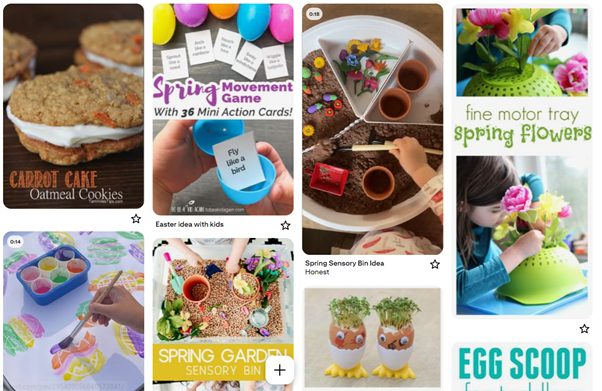
🐣 Sammy Skills Easter Sensory Tub

Fill with:

  • Toy bunnies and chicks
  • Stones
  • Grass
  • Soil
  • Plastic or hard boiled eggs

Perfect for digging, filling, pouring, and imaginative play.

🌱 Grow Cress in Eggshells with Fay 5 a day and Sammy Skills

Connect with Fay 5‑a‑Day and talk about the seeds that are needed to grow the cress and how they count towards one of their 5 a day. Children can grow cress in empty eggshells and taste it once grown.

🥄 Water Tray Egg Scoop with Sammy Skills

Use ladles, spoons, and floating eggs for scooping, pouring, transferring and fine‑motor development.

🧘‍♀️ Springtime Yoga with Sammy Skills

Try simple poses inspired by:

  • Bunnies
  • Chicks
  • Flowers
  • Growing seeds

A lovely way to end a busy Easter activity session. You can find poses linked to spring on our pintrest board.

We would love to see photos of these activities on social media – so don’t forget to tag us @startwellbirmingham


Research on physical activity within the early years age group remains limited, with much of the available data predating the COVID-19 pandemic. Collecting accurate physical activity data for young children is challenging due to multiple influencing factors, such as the type of setting attended, frequency and duration of attendance, and activities outside of formal care, including evenings and weekends.

Recent findings indicate a concerning trend: children’s screen time is increasing alongside sedentary behaviours. Feedback from early years providers supports this observation, suggesting that rising screen use is negatively impacting physical activity and hands-on learning experiences. According to World Health Organization (WHO) guidelines, children under 2 years should have no screen time, while those under 5 years should be limited to a maximum of one hour per day.

The latest report, Accelerometer-Measured Physical Activity in UK Early Childhood Education and Care Settings (published November 2025), highlights that most children are not meeting the UK Government recommendation of 180 minutes of physical activity daily. The research shows excessive time spent in sedentary activities and a noticeable decline in activity levels during weekends.

We strongly encourage practitioners and families to prioritise active play and movement-based learning. Resources such as Suzy Startwell, Active Azra, 180 Katie, and Sammy Skills can support this effort. Increasing physical activity is essential to promote healthy development and counterbalance the growing prevalence of screen-based behaviours.

Key Findings from the Accelerometer Study:

The recent Accelerometer study revealed that, on average, children engage in only 22 minutes per day of moderate to vigorous physical activity (MVPA) while in early years settings. This falls significantly short of the Government guideline of 60 minutes of MVPA daily.

This Raises Important Questions for Practitioners:

  • How do you ensure that high-intensity physical activity is incorporated into your setting’s daily routine?
  • What strategies do you use to monitor and evaluate activity levels?

Expert Insight:

Professor Ruth Kipping, Public Health expert at Bristol Medical School, emphasises that “early years settings play an important role in promoting physical activity and reducing inequalities, especially as government-funded childcare expands.”

Supporting this, recent research findings show:

  • Fewer than 23% of children aged 2–4 met the WHO recommendation of 180 minutes of physical activity daily.
  • Only 2.4% achieved the target of 60 minutes of moderate to vigorous activity.
  • Boys were 8% more likely than girls to meet the guidelines.

This is particularly noteworthy because, across all areas of the Early Years Foundation Stage (EYFS), girls typically outperform boys. Yet, in this physical activity study, boys appear more active. Furthermore, by ages 4–5, boys are statistically more at risk of obesity than girls, making these finding even more significant.

The study also found children spend an average of 148 minutes per day in settings being physically active, which decreases by 16 minutes over weekends. Of these 148 minutes, 123 minutes were light movement, highlighting the need to increase opportunities for more vigorous activity.

Action Points for settings:

  • Encourage more movement throughout the day by integrating active play and structured physical activities.
  • Change your routines to support the application of more physical activity during your day.
  • Access Startwell training to upskill staff
  • Promote Startwell messages: How do you share messages from Startwell’s physical activity characters with the children and other staff?
  • Review your environment to make sure it offers lots of movement rich activities and reduces sedentary activities.
  • Engage parents: Do they understand the importance of the 180-minute daily activity guideline?
  • Promote Startwell messages: How do you share messages from Startwell’s physical activity characters with families? You can share our seasonal activity ideas that can be done at home!

References:

Accelerometer measured+Physical+Activity+in+UK+Early+Childhood+Education+and+Care+Settings%3a+A+Cross-Sectional+Study+in%3a+Journal+of+Physical+Activity+and+Health+-+Ahead+of+print&u=a1aHR0cHM6Ly9wdWJtZWQubmNiaS5ubG0ubmloLmdvdi80MTI4NTEyNC8

Startwell Birmingham is an NHS approved programme based around 8 key characters and their messages to help early years settings, parents and health professionals create a healthier environment for children and families. Startwell wants children to eat well, be active and achieve more. February is National Heart Month, we want you to get your heart going ‘Boom, Boom, Boom’ with 180 Katie.

6th February: Wear Red Day in line with National Heart Month 2026

Wear Red Day is a fundraising and awareness day to support children and adults born with congenital heart disease. It’s really easy to take part as all you need to do is wear something red. Why not take this opportunity to use 180 Katie to talk about the importance of a healthy heart and how to make the heart go Boom Boom Boom. It’s surprising how many children do not know where their heart is, so this is a great opportunity to talk about the heart and its role in our body. If you can get hold of a stethoscope and listen to their own hearts that will make it all the more exciting and real for them. Remember the need to do 180 minutes of activity daily to keep our hearts healthy.  180 Katie wants all walking early years children to achieve 180 minutes of physical activity every day – with 60 minutes of that being high intensity physical activity for our over 3’s and short sharp bursts of high intensity throughout the day for under 3’s… more is better!

So throughout February we want you to focus on high intensity physical activity in your setting – any exercises that get the heart beating fast, where children’s breathing rate increases and maybe looking a little more rosy in the face!

180 Katie wants you to complete the following high intensity activities throughout February:

High Energy Musical Statues

Show children 180 Katie and explain that she wants their hearts to go Boom, Boom, Boom and ask them to feel theirs now. Then play some high tempo music and ask the children to move their bodies as much as possible, (don’t forget to be a good Suzy Startwell and role model the movements too) when the music stops ask them to stand still and each time make them aware of the changes which are happening in their bodies:

‘Place your hands on your chest – can you feel your heart going boom boom boom like 180 Katie? That means your heart is having lots of fun.’

180 Katie Calls (Like ‘Simon Says’)

Remember to be a Suzy Startwell and role model the actions

  • 180 Katie Calls: Monkey Swings (Run around with arms up high swinging around the room nice and fast)
  • 180 Katie Calls: High Bunny Hops (encourage children to bounce as high as they can)
  • 180 Katie Calls: Fast Runs like a cheetah
  • 180 Katie Calls: Fast Crawling like a turtle (on hands and knees moving as quickly as possible)
  • 180 Katie Calls: Fast Flying like a bird (arms out wide running around the room)
  • 180 Katie Calls: Fast Gallop like a horse (encourage side stepping/ galloping off both legs)
  • 180 Katie Calls: Leap like a Frog (encourage children to leap as far as possible)
  • 180 Katie Calls: Fast Scurry like a Mouse
  • 180 Katie Calls: Fast Swimming like a Fish

These are just examples, but why not see if you can use ‘180 Katie Calls’ to get your children moving their bodies in a whole host of other ways:

180 Katie takes a trip to the beach, 180 Katie takes a trip to the shops, 180 Katie takes a trip to the circus, 180 Katie travels using different transport, 180 Katie visits the zoo

Some physical activities can be mistaken for being high intensity,

when actually they are moderate activity. Remember the following ‘F’s’ for High intensity activities are: Fast paced, Full of energy, Fast heart, Fast breathing, Flushed face and always feel good =  FUN

Talk to the Children about How High Intensity Physical Activity Makes our Body Feel

  1. ‘Place your hands on your chest – who can feel their heart beating?’
  2. ‘Why is our heart beating faster?’ (answer: “The heart needs to pump all of our blood around our bodies to keep our muscles working well” “Our hearts are a muscle and we need to exercise it every day to keep it strong and healthy”)
  3. ‘Who is breathing faster? Why do you think we are breathing faster?’ (answer: “our bodies and muscles need oxygen”)
  4. ‘Who is feeling a little warmer? Is anyone’s face a little pink?
  5. “Let’s have a drink and hydrate our bodies”

Early years settings are key and play a crucial role in facilitating and encouraging active environments and lifestyles. If we can develop children’s enjoyment and love of physical activity from the start through activities that stimulate children to develop new skills then we are setting them up to have the healthiest start possible. We know that adults have a huge influence on children’s development, so it is important that we are all Suzy Startwell’s and role model activities as well as being supportive and encouraging as children undertake a range of physical activities. This will improve children’s wellbeing, health and life expectancy.

Free play v’s Structured play in relation to Physical Activity:

Lots of settings set up purposeful physical play opportunities within their environments but they do not always plan for adult structured physical activity to take place. The question we ask you is “do you think your children are getting 180 minutes of physical activity daily?”

Free play environments allow and encourage children to explore and engage in activities and they are given the freedom to choose from a wide range of opportunities that suit their interests. This could also mean that they choose not to take part in activities that do not interest them or they find difficult – physical activity could fall into this category. This makes it difficult for staff to ensure children are accessing a rounded curriculum.

Free purposeful physical play should enable children to face challenges, manage risk, develop resilience and enhance their physical literacy if set up and supported by adults.

Structured physical play sessions are organised and delivered by staff with a focus on developing a particular skill to develop physical literacy.

Active for Life state that “Physical literacy is when a person has the skills, confidence, and love of movement to be active for life.”

Startwell want you to support children to be physically literate ensuring that they are self-motivated and have the confidence and physical competence to move in a variety of ways.

Moving should never be left to chance and to ensure that children are achieving their 180 minutes of physical activity daily can only be done if adults plan and rota in physical activity. Structured physical activity allows adults to plan a range of skills at the children’s level and make adaptations so that children are challenged, but ensuring skills are being met. Remember that for 3–5-year-olds 60 minutes of their 180 Katie should be high intensity where their hearts go Boom, Boom, Boom.

Ask yourself are your children getting their 180 minutes and do you offer purposeful play through a mixture of structured adult led and child initiated play through free flow environments.

Environments

Consider both your indoor and outdoor spaces, as physical activity should be taking place in both areas.

Think about your:

  • Opportunity – free flow/ set times etc.
  • Safety – risk access not restrict.
  • Space – is anything moveable?
  • Flooring texture/ textures – soft, uneven, bark, stones, grass, carpet, laminate etc
  • Equipment – fixed/moveable/ small/ large/ variety
  • Zones – physical areas both gross and fine motor indoors and outdoors
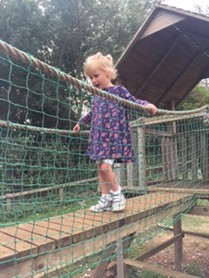
  • Music – opportunities and systems indoors and outdoors
  • Weather – clothing, shelter, opportunities for all ages
  • Planning – is it planned or free flow
  • Staffing – who takes responsibility? Who sets it up?
  • Local resources – do you use local parks, other settings, soft plays etc
  • Open ended – play, opportunities and resources.

National Fitness Day is taking place in the UK on Wednesday, September 24th, 2025. It is designed to be the most active day of the year, what are your plans?

What activities have you got planned to ensure your children are physically active  – this is a great opportunity to try new activities.

Activity Ideas:

Why not try some of these activities:

Active Nursery Rhymes:

Babies: Stand up instead of sitting down and use the arms and hands as you undertake the actions for Twinkle Twinkle Little Star, can they bend their knees or dance and move as you sing it? Take a look at an example of some Active Nursery Rhymes for Babies from our Youtube channel.

Toddlers: Stand up and do fast actions for songs instead of sitting down for example 5 little Speckled Frogs – can they all jump about like frogs and do the actions, or can you use an elastic and do Row, Row Row your boat standing up and make exaggerated movements.

Pre-schoolers: Ring games encourage movement can the children do Down in the Jungle, Ring a Ring a Roses and Head Shoulders Knees and Toes. Remember to be as enthusiastic as possible and move to your maximum.

Obstacle Courses

Babies: Can you create crawling courses where children crawl through tunnels, under tables, over textured mats, walk over large planks with support.

Toddlers: Can you create walking courses where children crawl through tunnels, walk over large planks, step in and over hoops and tyres, climb in and out of boxes, roll of floor mats and through an object towards an object to finish.

Pre-schoolers: Can you create high intensity locomotor courses or manipulation courses where children move at pace and complete tasks such as weaving in and out of cones, running over planks, jumping on and off obstacles, throwing and catching objects etc.

Check out our Pinterest Pages or our Activity Ideas section for more ideas on the website.

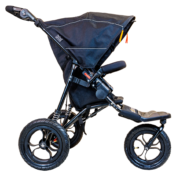
Most pushchairs do not come with an age limit or guidance about when they should be used until but as soon as your child is steady on their feet, they should be given the opportunity to walk whenever possible as walking will strengthen their muscles, develop their stamina and encourage movement, exploration and independence skills.

By the age of 3 children should have been transitioned out of pushchairs unless they have mobility needs. Government guidelines state that children under 5 need to be active for 180 minutes each day like 180 Katie. By the age of 3 that should be 120 minutes of moderate activity and 60 minutes of high intensity activity where the heart goes Boom Boom Boom. For more information on the difference between moderate and high intensity view our Startwell YouTube page for videos and our Startwell Website for activity ideas. Check out our Ditch the Buggy facebook video!

Walking with your young child does take more time and this needs to be planned into your day but the benefits of walking together include developing muscle control and strength, reduces the risk of flat head/spot syndrome and obesity, development of speech and independence skills, social interaction, improved wellbeing and happiness, engagement with nature using a range of senses and teaching children about road safety.

Physical activity can also have positive effects on behaviour and wellbeing in all children and research has shown positive impacts for children with Autism and other Special Educational Needs:

Wellbeing in nature – how being outside can help autistic people’s wellbeing

Effectiveness of physical activity interventions for core symptoms of autism spectrum disorder: A systematic review and meta-analysis – PubMed

Positive effects of physical activity in autism spectrum disorder: how influences behavior, metabolic disorder and gut microbiota – PMC

Active Azra says get those belly buttons moving and Move More and Sit Less and Suzy Startwell says walking with your child sets them a great example for health and fitness.

Top tips:

  • Encourage short walks every day; walking to and from nursery if possible is a great way to start.
  • Introduce walking intervals when using the buggy
  • Making walking fun and interesting: for example, use Bingo cards to encourage children to search for items during the walk (e.g. pine cones, road signs, puddles, dogs, cats, red front doors, yellow flowers, green cars)
  • Pick up litter along your route
  • Walk together with friends
  • Allow time – don’t rush your walks
  • Think about using a buggy board to aid the transition
  • Park further away from destinations so that you have to walk together to reach the destination
  • Think about other ways to travel such as a scooter, balance bike, trikes etc
  • Think about rewards for walking such as a trip to the park when they have completed 5 short walks or an activity of their choice.
  • Wear suitable clothing and footwear so that walking in all weathers is comfortable and fun

This Easter rather than setting up a traditional Easter Egg Hunt we would encourage you to set up an Easter activity in line with your Startwell Award – so why not give the Sammy Skills Easter Hunt a go!

Equipment Needed:

  • Bean Bags
  • Hoops
  • Print outs or soft toys – bunnies, lambs, daffodils, chicks

Set Up:

  • Place equipment in different corners around the setting or even better in the garden or at the local park to get the children outdoors.

Activity:

Sammy Skills wants you to go on an adventure with him this Easter – he wants to see all the skills you have been developing in nursery. Are you ready to take on the challenge?


1. Start by singing ‘Sleeping Bunnies’

  • Place bunny prints outs / toys around the garden.
  • Sammy Skills wants you to hop like bunnies and find the bunnies in your garden – encourage children to find the printout of the bunny/ies.
  • Place out hoops on the floor and see if the children can hop/ jump in and out of the hoops.

2. Next sing ‘Bah Bah Fluffy Sheep’

  • Place sheep prints outs / toys around the garden.
  • Sammy Skills wants you to get on your hands and knees and pretend to be sheep – encourage children to move around the space on all fours like sheep (this is great for developing core stability) to find the printouts or soft toy sheep.
  • Place bean bags on the children’s backs and see if they can balance them as they crawl around.
  • Sheep also love to run, bound and jump – can you encourage the children to move around your setting like this.

3. Next sing ‘Ring a Ring a Roses’

  • Sammy Skills would like you to find some other flowers in the garden, this time of year we see lots of daffodils growing, can you find any daffodils in the garden – encourage the children to skip around the garden and find daffodils, or images of flowers that you have printed out.

4. Next sing ‘Old McDonald’

  • Place chick prints outs / toys around the garden.
  • Sammy Skills would like you to find the Easter chicks – encourage the children to run around the garden as fast as they can flapping their arms like little chicks.
  • Remember to do the actions for all of the animals on the farm and make it as fun and energetic as you can.

Remember that Active Azra wants us to make all of our nursery rhymes as active as possible, so encourage the children to stay active rather than sitting down for them.

You could also do a traditional find an egg hunt with paper eggs but once they find them they have to complete the physical action on the back – have fun!

We would love to see photos of this activity on social media – so don’t forget to tag us @startwellbirmingham

1st February – 9th February is National Story Telling Week

National storytelling week aims to bring the love of reading to life as people of all ages read stories together using a range of media such as props, story sacks, movement and music.

We at Startwell are asking you to hold an Active Story week and remember to be active several times throughout the story and make sure staff are being a good Suzy Startwell and role model the actions for children to copy. 

Have you explored our active story support sheets? If not follow this link and have lots of fun with them. Remember you do not have to make every page or every character active you could just choose a few depending on the age and abilities of the children in your care.

So far we have uploaded:

  • The Gruffalo
  • Run Gingerbread Man
  • Shark in the Park

More will be added each month for you to try out, explore and have fun within your setting.

Enhancements using the stories can be made by setting up tuff trays with elements from your chosen story. Can you use the characters from the story alongside the physical characters. Why not do a story themed obstacle course, dances etc The most important thing to remember is have fun as being physical should be fun.

How creative can you be? Let’s get on board with using active stories and use a mix of indoor and outdoor spaces to explore them. Why not collect a range of props and take the children on a journey that they interact with and help make. Use open questions as to what should happen next and who would they like to see in the story. Have fun and go as wild and bold as you can. You can also use Yoga cards to make up a story and link the moves together – this is a great activity to develop Sammy Skills. Check out our Active Stories video here as an example.

Stories provide a great opportunity to not only develop language and communication in the setting, but also increase both physical activity levels and skill development, by incorporating Active Azra, Sammy Skills and 180 Katie.

“Studies have shown an increase and improvement in Fundamental Movement Skills and language and reading competency where children had the opportunity to use movement during storytelling sessions” Donath et al., 2015 and Kory and Breazeal 2014. Interventions that enhance language skills in early years have been shown to improve communication social skills (Glonek and King, 2014) and reading comprehension (Fricke et al., 2013).

Startwell Birmingham is an NHS approved programme based around 8 key characters and their messages to help early years settings, parents and health professionals create a healthier environment for children and families. Startwell wants children to eat well, be active and achieve more. February is National Heart Month, we want you to get your heart going ‘Boom, Boom, Boom’ with 180 Katie

7th February: Wear Red Day in line with National Heart Month 2025

Wear Red Day is a fundraising and awareness day to support children and adults born with congenital heart disease. It’s really easy to take part as all you need to do is wear something red. Why not take this opportunity to use 180 Katie to talk about the importance of a healthy heart and how to make the heart go Boom Boom Boom. It’s surprising how many children do not know where their heart is, so this is a great opportunity to talk about the heart and its role in our body. If you can get hold of a stethoscope and listen to their own hearts that will make it all the more exciting and real for them. Remember the need to do 180 minutes of activity daily to keep our hearts healthy.  180 Katie wants all walking early years children to achieve 180 minutes of physical activity every day – with 60 minutes of that being high intensity physical activity for our over 3’s and short sharp bursts of high intensity throughout the day for under 3’s… more is better!

So throughout February we want you to focus on high intensity physical activity in your setting – any exercises that get the heart beating fast, where children’s breathing rate increases and maybe looking a little more rosy in the face!

180 Katie wants you to complete the following high intensity activities throughout February:


High Energy Musical Statues:

Show children 180 Katie and explain that she wants their hearts to go Boom, Boom, Boom and ask them to feel theirs now. Then play some high tempo music and ask the children to move their bodies as much as possible, (don’t forget to be a good Suzy Startwell and role model the movements too) when the music stops ask them to stand still and each time make them aware of the changes which are happening in their bodies:

  • ‘Place your hands on your chest – Can you feel your heart going boom boom boom like 180 Katie?’ That means your heart is having lots of fun.


180 Katie Calls
(Like ‘Simons Says’, Remember to be a good Suzy Startwell and role model the actions.)

180 Katie Calls: Fast Monkey Swings (Run around with arms up high swinging around the room nice and fast),
180 Katie Calls: High Bunny Hops (encourage children to bounce as high as they can),
180 Katie Calls: Fast Runs like a cheetah,
180 Katie Calls: Fast Crawling like a turtle (on hands and knees moving as quickly as possible),
180 Katie Calls: Fast Flying like a bird (arms out wide running around the room),
180 Katie Calls: Fast Gallop like a horse (encourage side stepping/ galloping off both legs),
180 Katie Calls: Leap like a Frog (encourage children to leap as far as possible)
180 Katie Calls: Fast Scurry like a Mouse
180 Katie Calls: Fast Swimming like a Fish

This is just one example but why not see if you can use ‘180 Katie Calls’ to get your children moving their bodies in a whole host of other ways:

180 Katie takes a trip to the beach, 180 Katie takes a trip to the shops, 180 Katie takes a trip to the circus, 180 Katie travels using different transport, 180 Katie visits the zoo

…..

Some physical activities can be mistaken for being high intensity, when actually they are moderate activity. Remember the following ‘F’s’ for High intensity activities are:

Fast paced, Full of energy, Fast heart, Fast breathing, Flushed face and always feel good =  FUN

…..

Talk to the children about how high intensity physical activity makes our body feel…

  1. ‘Place your hands on your chest – who can feel their heart beating?’
  2. ‘Why is our heart beating faster?’

Answer: ‘The heart needs to pump all of our blood around our bodies to keep our muscles working well” “Our hearts are a muscle and we need to exercise it every day to keep it strong and healthy”

  1. ‘Who is breathing faster? Why do you think we are breathing faster?’

Answer: ‘Our bodies and muscles need oxygen’

  1. ‘Who is feeling a little warmer? Is anyone’s face a little pink?’
  2. “Let’s have a drink and hydrate our bodies”