Micky Me Size
What do we know
Micky Me Size encourages children to have the correct portion size for their age. Children should be eating ‘me size meals’. Toddlers and children have smaller stomachs than adults so it is important they eat smaller amounts of food regularly. Offering large platefuls of food can be overwhelming and stop children enjoying mealtimes, plus if they eat more than their small bodies need it converts to stored fat in their bodies which can lead to childhood obesity and illnesses like heart disease, type 2 diabetes and cancer later in life.
Young children may have smaller stomachs but their energy needs are high, therefore it is important to fill their stomachs with nutritious food from all the food groups.
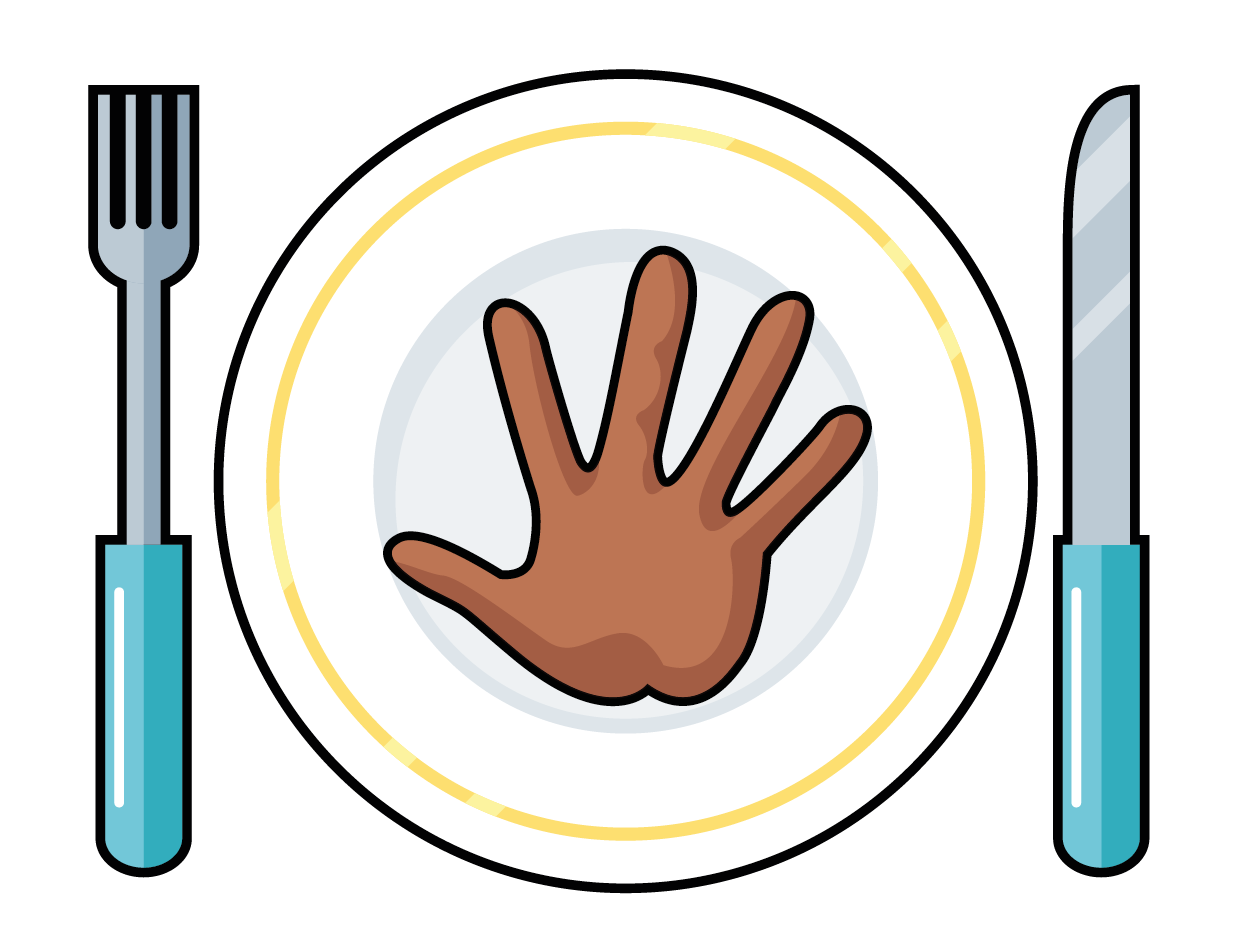
Portion sizes have got bigger and bigger over the years and even plates have got bigger! It is really important to serve ‘child-size’ meals on a child-size plate or bowl rather than giving too much and expecting it all to be eaten. Our stomach is stretchy, a bit like a balloon, if we keep overfilling it/overeating our stomach increases in size and we will need more food to get that feeling of ‘fullness’ which can lead to obesity. Eating smaller amounts will mean there is less food waste and we won’t be eating too much.
The plate below shows the average size plate for a pre-school aged child, be aware that the size of the centre varies lots on different children’s plate. Our hand size can be a rough guide to our plate size so if we stretch out our hands on the plate we can quickly tell if it is a suitable size. Use this worksheet to check the size of your plates. This can be shared with families to look at their plates at home.
Should I give seconds?
Appetite and energy levels can vary between children and at different ages e.g. higher energy requirements during growth spurts or higher intensity activities outdoors. If it is a healthy meal or snack then a smaller portion of “seconds” can be given if requested. Give a small amount of the vegetables, fruit and/or the savoury option.
Each meal should be made up of two courses, starter and main or main and second course. This will provide interest and give greater opportunity to get a wider range of nutrients. Therefore even if the first course has not been finished it is still important to offer the next course too.
How do you know when a child is full?
Babies, toddlers and children are much better than adults at regulating their own appetite. They know when they are hungry and when they are full whereas adults have learnt over time to override these hunger and fullness signals. Some signs that babies and toddlers have eaten enough are:
- Saying no
- Keeping their mouth shut when food is offered
- Pushing away the bowl, plate or spoon containing food
- Turning their head away from food being offered
- Spitting out food repeatedly
- Crying, shouting or screaming
- Gagging or retching
It’s ok if plates or bowls don’t come back clean, if they’re full that’s ok.
Avoid force feeding. If children refuse a meal or a snack, it doesn’t always mean they don’t like it. It’s likely that they’re just not hungry (see signs above), or are too tired. Try not to offer an alternative though, as they will soon learn that they will get away with asking for alternatives, which can lead to fussy eating. Explain when the next planned meal or snack is, and that it will be the next time they can eat.
What Micky Me Size Says
- Remember children’s tummies are smaller than adults so they don’t need the same amount of food.
- Children don’t need to clear their plates and should be offered two courses of healthy, nutritious foods.
- Give small ‘child size’ portions on ‘child size’ plates to start with and you can always give seconds.
More Startwell characters




Partners

Facebook Posts