
The Association of UK Dietitians (BDA) estimates that between 1-10% of adults and children have food hypersensitivity. However as many as 20% of the population experience some reactions to foods which make them believe they have food hypersensitivity.
Genuine food allergy is rare, about 2% of the population (and 8% of children under the age of 3) are affected whereas food intolerance is more common. There are some significant differences between food allergy and intolerance which we have listed in the following table.
| Food Allergy | Food Intolerance |
|---|---|
| A reaction by your immune system when it mistakenly reacts to proteins found in food | Does not involve your immune system |
| Symptoms usually come on suddenly within seconds or minutes of eating the food, occasionally they can be delayed | Symptoms come on more slowly and are long-lasting. They mainly involve the digestive system |
| In extreme cases it can be life-threatening | It’s never life-threatening |
| Even a tiny trace of the food can cause a reaction | A reasonable portion of food is usually needed to cause a reaction, although some people can be sensitive to small amounts
You may crave the problem food |
| Usually to specific foods (see 14 common Food Allergens ) | Can be to a wide range of foods |
| It is easily diagnosed with tests | It’s difficult to diagnose as there are only a few reliable tests |
14 Common Food Allergens
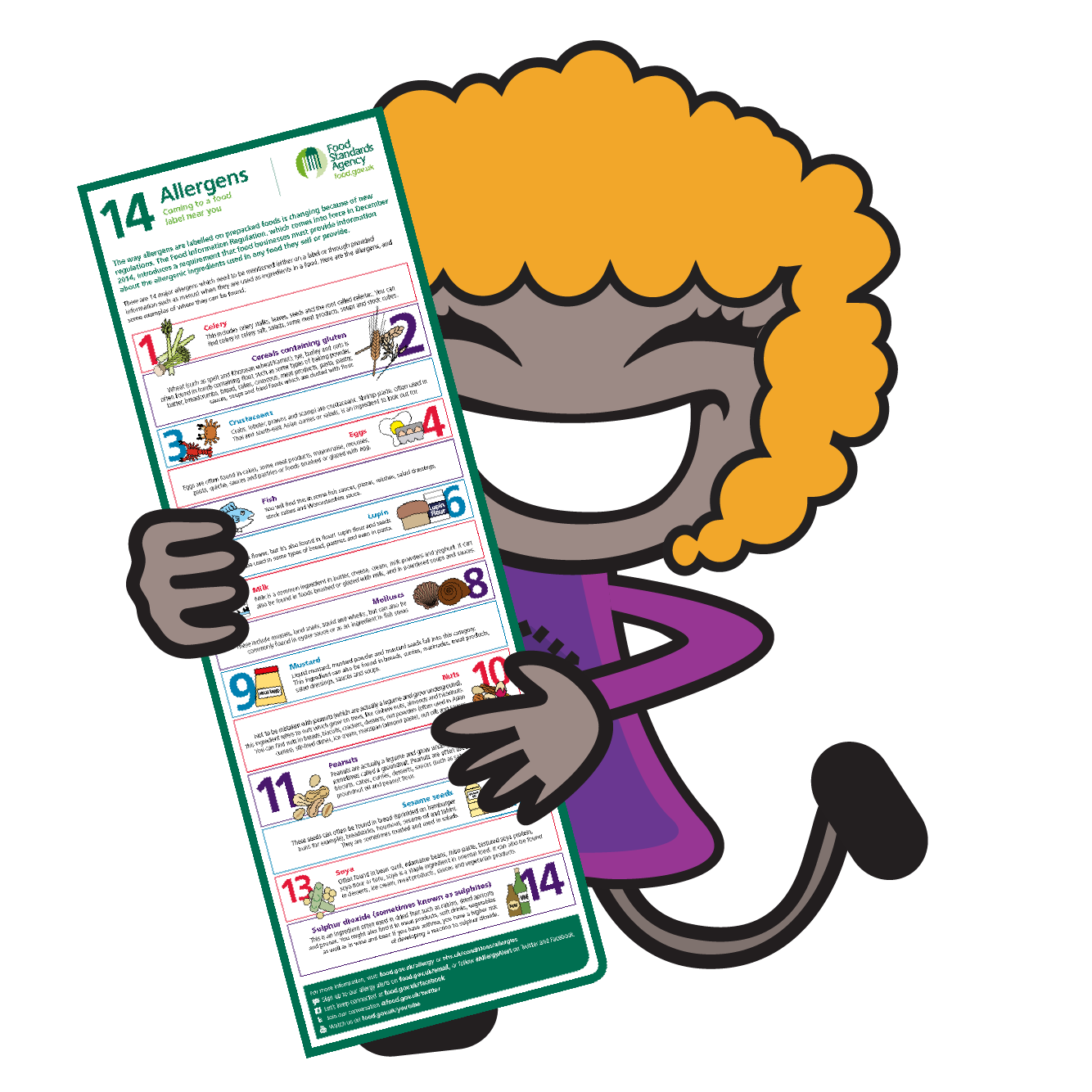
Food Allergens in Your Setting
To ensure you keep all children safe it is important to check with all parents whether their children have any known food allergies. As food allergies and intolerances are often self-diagnosed it is important to ask for written confirmation from a doctor or other qualified health professional (e.g. paediatrician, dietitian etc.). Parents should be discouraged from self-diagnosing and starting an elimination diet without the support of a qualified health professional. If you suspect that a child has a food allergy or intolerance you should encourage parents go to their doctor for advice and diagnosis, as key nutrients may be removed from the diet and cause nutritional deficiencies for the child if it is not properly managed.
It is a legal requirement to provide information on the potential food allergens in all the food served within your setting including meal times, snack times, food activities and celebrations. This information needs to be readily available for parents to access. The easiest way to do this is to complete the food allergen table by listing the foods you serve and marking any food allergens in them. You may already have this information on your menus and if you use a caterer they should have provided you with this information.
It is important that all staff know the allergy information for the children that they look after. They should know what the allergy is to, the possible reaction if the food is consumed and how to treat any reactions.
If you allow the children to bring in packed lunches it is important that they do not swap foods to reduce the risk of allergic reactions in other children. Many settings also request that parents do not send foods which are known to be highly allergenic, such as nuts and nut products, as their allergens can possibly be airborne.
Further Information and Support
For further information and to help support children with food allergies and intolerances the following organisations are all reputable with evidence based information:
- Allergy UK: https://www.allergyuk.org/
- Association of UK Dietitians (BDA): https://www.bda.uk.com/
- NHS:https://www.nhs.uk/conditions/food-allergy/and https://www.nhs.uk/conditions/food-intolerance/

Partners

Facebook Posts

This is the sixth and final week of our 6 week Startwell summer holiday challenge. Enjoy running and rolling with Sammy Skills and have a go at making lunch with Fay 5 a day. We hope that you have enjoyed all of the activities over the last 6 weeks and have had a great summer. startwellbirmingham.co.uk/wp-content/uploads/2025/07/6-Week-Summer-Challenge-Poster.pdf
Thanks to those who came along to our Startwell Characters and Messages Training on the 19th August. Take a look at some of the feedback from this training!![]()
![]() Our training is free and available to early years practitioners within Birmingham. To see what training we have available: startwellbirmingham.co.uk/training-dates/
Our training is free and available to early years practitioners within Birmingham. To see what training we have available: startwellbirmingham.co.uk/training-dates/