
The nutrients that children need every day are made up from the food groups listed below. The frequency that children need to eat the food groups each day are stated next to the food group:

- Potatoes, bread, rice, pasta and other starchy carbohydrates (energy foods) – at breakfast, lunch and dinner and can be given as snacks
- Fruit and vegetables (protective foods) – 5 portions a day
- Beans, pulses, fish, eggs, meat and other proteins (growing foods) – 2-3 portions a day
- Dairy and alternatives (strength foods) – 3 portions a day
Between the ages of 2-5 years children should be moving towards eating the balance of food in the Eatwell Guide. https://www.gov.uk/government/publications/the-eatwell-guide
The size of the plate children are using is also very important. If children are using plates that are too big it is easy to give children too large a portion. Children should be using child sized plates and bowls. Micky Me Size is our Startwell character which supports correct portion sizes by promoting the me size meals message. Children’s tummies are smaller than adults and therefore they need to eat smaller amounts of food to stay healthy.
An easy and visual guide to make sure you are using the correct size plate is to get the child to stretch their fingers out and draw around their fingers to the wrist to form a circle. You can use this worksheet to help you. This is roughly the size of the middle of the plate the child should be using. Below are examples of suggested plate and bowl sizes.
This section of our website will now show you some portion sizes for foods from each food group. The portion sizes are for children aged 1-4 years. The portion size shown in the pictures will be for 3-4 year olds or the highest nutrition requirement needed for 1-4 year olds. This means that the example portion sizes will be suitable for children with the highest nutrient requirements. Therefore smaller portion sizes may be needed for younger children aged between 1–2 years. It is important to remember that children’s appetite can change according to their growth and activity levels. Children should be encouraged to eat healthy food according to their appetite. Recognising the signs a child shows when they are full should be recognised and respected.
Potatoes, bread, rice, pasta and other starchy carbohydrates – serve at breakfast, lunch and dinner and can be given as snacks
Good choices are bread, potatoes, sweet potatoes, starchy root vegetables (e.g. yam, plantain and cocoyam), pasta, noodles, rice, couscous, bulgur wheat, low sugar and low salt breakfast cereals such as porridge, wheat biscuits and crisped rice.

White toast
1 slice 25g

Wholemeal pitta bread
1/2 pitta bread 25g

Couscous
80g

Brown Rice
80g

Jacket potato
80g

Mashed potato
80g

Spagetti
80g
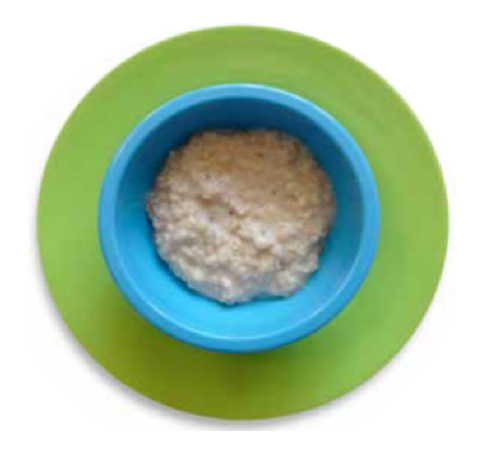
Porridge made with milk
15g porridge & 100ml milk

Wheat biscuits
20g & 100ml milk
Fruit and vegetables – serve 5 portions a day
Vegetables and fruits include those served with meals and within dishes. Dried fruit should be served at meal time only.
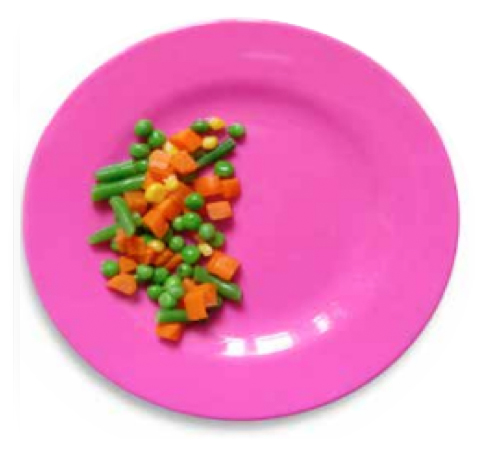
Mixed vegetables (frozen)
40g

Broccoli
40g
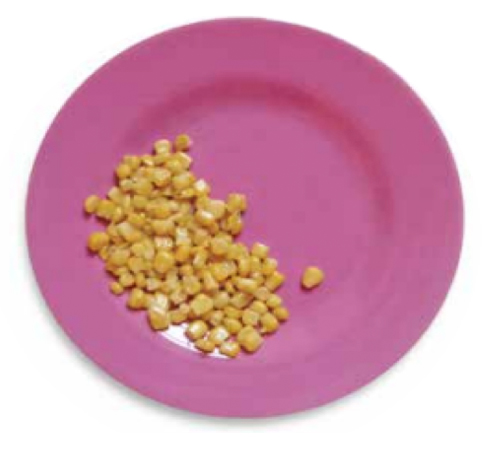
Canned sweetcorn
40g

Peas
40g

Yellow pepper
40g

Lettuce
40g

Cucumber
40g

Tomato
40g

Apple
1/2 apple 40g

Grapes
40g
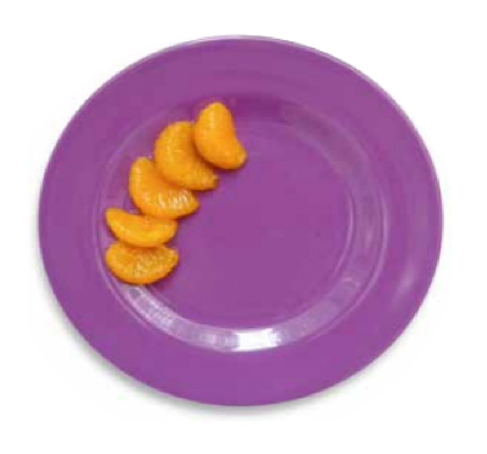
Mandarins canned in juice, no juice
40g

Stewed apple with juice
40g
Beans, pulses, fish, eggs, meat and other proteins – serve 2-3 portions a day. Vegetarian children should eat 3 portions a day
Good choices include meat (beef, lamb, pork, mutton, venison), poultry (chicken, turkey, duck), white fish (cod, haddock, plaice), oily fish (salmon, mackerel, trout, sardines), shellfish (prawns, mussels, shrimps), eggs, meat alternatives (soya bean products, tofu, quorn), pulses (kidney beans, haricot beans, butter beans, chickpeas, red and green lentils) and ground and nut butters (ground almonds, hazelnuts, brazel nuts, peanuts, peanut butter)

Chicken
45g

Beef
40g
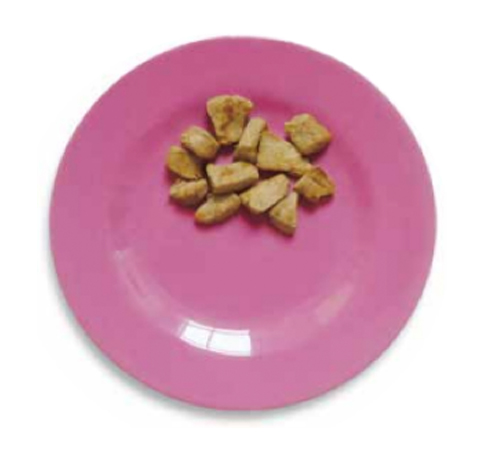
Pork
40g

Minced Lamb
40g

Salmon fillet
40g

White fish
40g

Canned tuna
40g

Chickpeas
40g
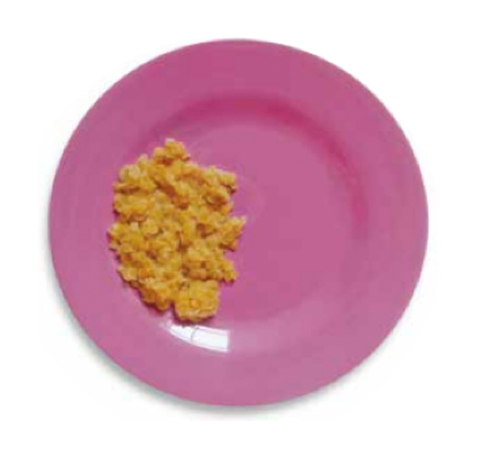
Red lentils
40g

Baked beans
55g

Scrambled egg
50g
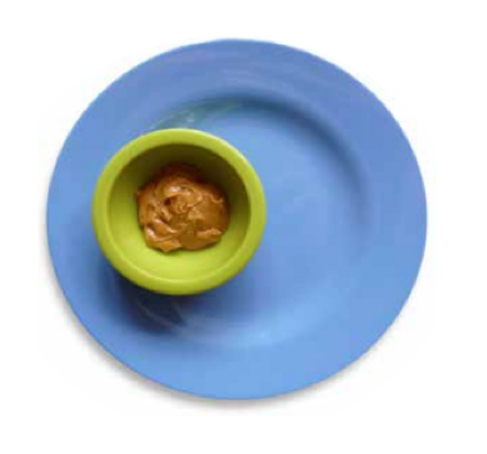
Peanut butter
15g

Quorn mince
50g

Quorn pieces
50g
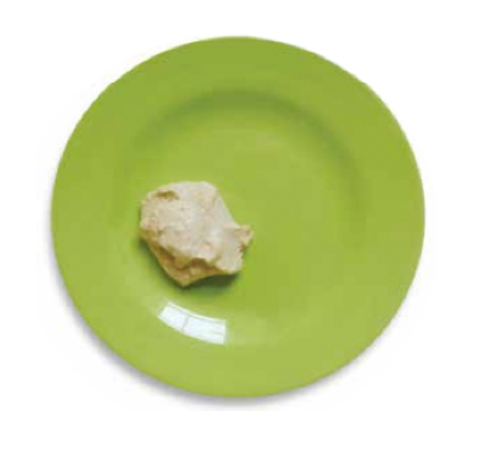
Humous
40g
Dairy and alternatives – serve 3 portions a day. Full fat milk should be given to children between 1-2 years, semi-skimmed milk can then be given from the age of 2. Please note children under 5 years old should not be given rice milks due to trace levels of arsenic.
Include milk, milk alternative, cheese (hard and soft cheeses), yoghurt, fromage frais, custard and milk based puddings (rice pudding, semolina).

Cheddar cheese
15g

Mozzarella
20g

Plain yoghurt (full fat)
60g
References:
Action for Children (2017) Promoting and encouraging healthy eating in early years settings. Available from: www.foundationyears.org.uk/eat-better-start-better
First Steps Nutrition (2018) Good food choices and portion sizes for 1-4 year olds. Available from: www.firststepsnutrition.org/eating-well-early-years
HM Government (2017) Example menus for early years in England: Part 1 – Guidance. Available from www.gov.uk
HM Government (2018) The Eatwell Guide. Available from: www.gov.uk
The Caroline Walker Trust (2011) Eating Well for 1-4 year olds. A practical guide. Available from: www.cwt.org.uk

Partners

Facebook Posts

This is the sixth and final week of our 6 week Startwell summer holiday challenge. Enjoy running and rolling with Sammy Skills and have a go at making lunch with Fay 5 a day. We hope that you have enjoyed all of the activities over the last 6 weeks and have had a great summer. startwellbirmingham.co.uk/wp-content/uploads/2025/07/6-Week-Summer-Challenge-Poster.pdf
Thanks to those who came along to our Startwell Characters and Messages Training on the 19th August. Take a look at some of the feedback from this training!![]()
![]() Our training is free and available to early years practitioners within Birmingham. To see what training we have available: startwellbirmingham.co.uk/training-dates/
Our training is free and available to early years practitioners within Birmingham. To see what training we have available: startwellbirmingham.co.uk/training-dates/